
Many of the films can be seen here.
Historian and filmmaker Janus Bang and I showed two films at the Mad in Norway film festival in Lillehammer last month, Silence of the Truth: When Health Becomes Big Business and People Die and The Illusion of Psychiatry.
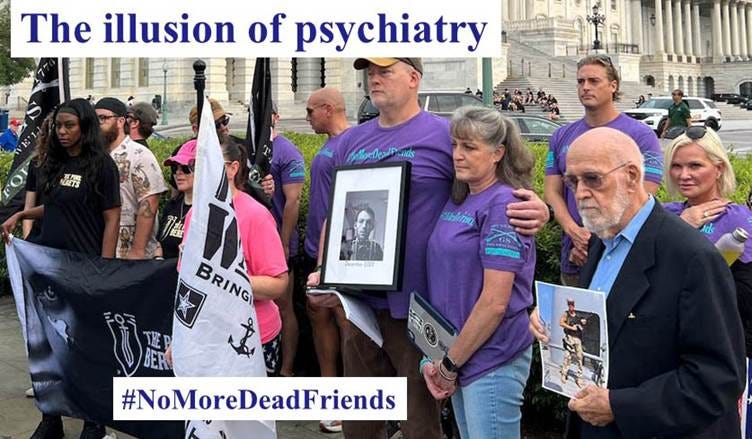
The psychiatry film consists of a series of interviews. We will work a little more on it and then make it publicly available. In it, Psychiatry Professor Joanna Moncrieff, founder of the Critical Psychiatry Network in the UK says:
“When I was doing my psychiatry exams, this was a few years before I set up the critical psychiatry network, I remember feeling like I had to get rid of all my common sense and then put all the psychiatric knowledge into my brain to get through the exams.”
Our own film film starts with Bob Whitaker who explains that it would have been one of the greatest discoveries in medicine ever if psychiatrists – which they claimed - had discovered the very molecules that caused madness and could fix these chemical imbalances with their drugs, just like insulin for diabetes.
But, as lawyer Jim Gottstein, who won two Superior Court cases in Alaska about forced drugging, says in the film about psychiatry: “It’s a total fraud.” He told me that the psychiatrist who saved him from a permanent career as a mental patient, Robert Alberts, said it was hard to find a psychiatrist to join his practice who had any common sense.
I have published my personal reflections on the three-day festival on the Mad in America website. The take home message came in the film Diagnonsense made by Norwegian filmmaker Ane-Martha Tamnes Hansgård. Her many diagnoses and drugs made matters worse and she started questioning the diagnoses. She consulted two psychiatrists in the United States who said she was bipolar. She doubted this diagnosis was correct, and on her way back to Norway, she saw an ad for a shaman and looked him up. He listened to her and said one simple sentence that was the defining moment for her:
“Didn’t anyone tell you it’s okay to be different?”
He also told her that it was up to her to choose if she wanted to define herself or if she preferred that others did it for her.
The shaman’s simple question encapsulated the whole film festival. It was a recurring theme that we should respect people as they are and give them more space to be themselves instead of trying to drug them towards normality, which won’t work.
Instead of trying to find a “right” diagnosis, as Ane-Martha tried, we should realise, as a psychologist said at a panel, that they are all nonsense. It is so absurd that a panellist had experienced that everyone in a class had a diagnosis but one who then asked, “Is there something wrong with me?”
There was a report from the Medication Free Unit in Tromsö and a film about Open Dialogue and the randomised trial of it, Open Dialogue & the ODDESSI Trial, which was published online on 26 August.
In the UK ODDESSI trial, adults in a mental health crisis were randomised to treatment as usual (223 patients) and to Open Dialogue (271 patients), with a two-year follow-up. Time to relapse after recovery was not different but Open Dialogue resulted in large and statistically significant reductions in psychiatric inpatient admission, re-referral to crisis care or secondary mental health services, and in improvements in self-rated recovery, health-related quality of life, and satisfaction with services.
There were also large differences in serious adverse events, which were life-threatening in 18 vs 4 patients, and they required hospital admission or prolongation of hospital stay over double as often as in the Open Dialogue group (262 vs 98 patients; the same patient could be counted more than once). Open Dialogue is not only better than drug-focused psychiatry, it is also vastly cheaper.
Fortunately, there are many signs that the psychiatric supertanker might sink before too long. During the panel discussion after our film, we noted that lawsuits and filmmaking will be two very important drivers for change.
Too many doctors don’t know how to handle their drugs prudently and safely and don’t meet their patients in a respectful dialogue but treat them as subjects. Many of the films documented exactly this.
Just outside the door to the festival venue, the mad world begins where millions of patients are killed every year with psychiatric drugs.
I am finishing a book with the working title: “No more dead friends: Psychiatry is a crime against humanity.”
My husband committed suicide on these drugs. I am right now reading that chapter in your book (How do I survive). Made multiple notes. 2 years ago I needed help myself, but knew from my late husband, I had to stop soon as I felt better, and after 3 months I told the doc I wanted to stop. To her very surprise (are you not doing better???)
What is bizarre in my country, portugal, is that mental illness cases when need forced treatments, they are managed by CRIMINAL courts.